
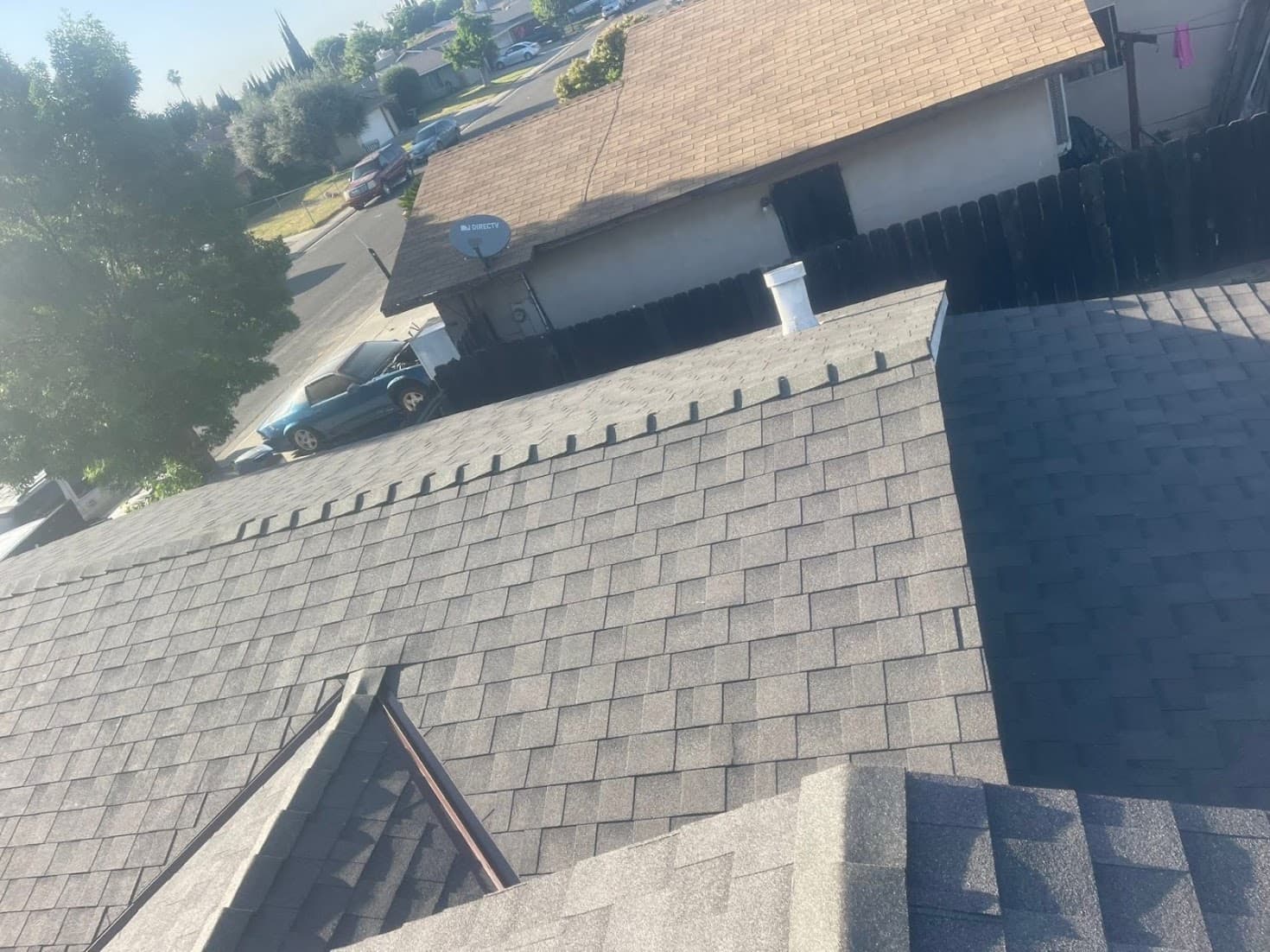
Not every roofing problem requires a full tear-off. But waiting too long on a replacement can cost far more than the roof itself. Here's how to tell the difference.
One of the most common questions homeowners ask us is: "Does my roof need to be replaced, or can it be repaired?" The honest answer is that it depends on the age of the roof, the extent of the damage, and the cost comparison between the two options.
A reputable roofing contractor will give you a straight assessment. Here's what we look at when evaluating a roof.
Signs That Repair Is Enough
- Isolated damage in one area — a few missing shingles after a storm, a single area of lifted flashing, or one small section of granule loss.
- Roof is less than 15 years old — if your shingles have significant life remaining, a targeted repair extends that lifespan cost-effectively.
- No underlying deck damage — if the plywood decking under the shingles is solid, a surface repair is viable.
- Single leak with clear cause — a flashing failure at a chimney, vent pipe, or skyline is often a clean repair.
- The repair cost is well under 30% of a full replacement — if the numbers make sense, repair first.
Signs That Replacement Is the Right Call
- Roof is 20+ years old — most dimensional shingles are rated 25–30 years, but Central Valley heat accelerates aging. A roof over 20 years is often near the end of its cost-effective life.
- Multiple leak points — if you're seeing water intrusion in multiple areas, the shingles have reached the end of their weatherproofing ability.
- Widespread granule loss — granules protect shingles from UV damage. Bare patches across large areas of the roof mean the shingles are failing.
- Sagging or soft spots — if the roof deck (the plywood) is soft, rotten, or visibly sagging, the structural layer needs replacement, not just the surface.
- Shingles curling or buckling across the roof — this is a systemic issue, not isolated damage. The whole roof is aging uniformly.
- You're planning to sell in 2–3 years — a new roof is a meaningful selling point and avoids renegotiation over roof condition during escrow.
In the Central Valley, roofs take more UV punishment than in coastal California. Ceres, Modesto, and Turlock average 260+ sunny days per year — that accelerates asphalt shingle degradation. A roof that would last 30 years in Seattle may last 22–25 years here.
What a Full Re-Roof Includes
- 1Tear-off — remove existing shingles and inspect decking.
- 2Deck repair — replace any rotten or damaged plywood sections.
- 3Underlayment — install new synthetic or felt underlayment for a waterproof base layer.
- 4Starter strips and drip edge — proper edge flashing is critical and often skipped by low-bid contractors.
- 5New shingles — we install dimensional (architectural) shingles, which provide better weather resistance and a longer warranty than 3-tab.
- 6Ridge cap and all flashing — chimney, pipe boots, valleys, and rakes must all be properly flashed.
What Does a Re-Roof Cost in the Central Valley?
A typical single-story home re-roof in Ceres, Modesto, or Turlock runs $8,000–$16,000 depending on square footage, pitch, and existing layers. Two-story homes and complex roof lines cost more. We provide detailed, itemized written estimates so you can compare apples to apples.
C Hernandez Construction does roofing right — proper tear-off, quality underlayment, and clean flashing work. Contact us for a free roof inspection and estimate.
Ready for a Free Estimate?
C Hernandez Construction · Lic. #1106454 · Ceres, CA · (209) 241-3765